

Most explanations of how acupuncture works focus on the basics: needles stimulate nerves, release endorphins, and influence circulation. While these are important parts of the picture, there's another question patients often have at their first visit - What's actually happening in my body during treatment, and why do I feel the way I do afterward?
This post walks through the process step by step, from the moment a needle is placed to the changes you may notice over the days and weeks that follow. If you're new to acupuncture, our acupuncture services in Campbell page explains what Dr. Cindi treats and what you can expect from care.
“Acupuncture doesn’t stop when the needles come out - the body’s response continues over the hours and days that follow.”
Two Ways of Explaining How Acupuncture Works
Acupuncture can be understood through two different, but complementary, perspectives: traditional Chinese medicine and modern physiology. Each offers a different way of looking at what happens during treatment.
Traditional Chinese medicine describes the body in terms of qi (pronounced "chee"), often translated as the body's vital energy. Qi is understood to support the body's functions and circulate through pathways called meridians. Acupuncture points are located along these pathways. When the flow of qi is disrupted or out of balance, symptoms can develop. By selecting and stimulating specific points, an acupuncturist aims to restore balance and support the body's ability to regulate itself. This system is based on thousands of years of clinical practice and observation, and it provides a framework for choosing points based on each person's individual pattern of symptoms rather than simply treating a diagnosis.
Modern research approaches acupuncture from a different angle, looking at the nervous system, circulation, connective tissue, and brain chemistry. Inserting and stimulating a needle can activate sensory nerves and trigger responses that extend beyond the immediate treatment area. Research suggests these responses can influence pain signaling, the release of natural pain-relieving chemicals, local blood flow, and activity in parts of the brain involved in pain and stress regulation. Scientists continue to investigate exactly how these mechanisms work, and the strength of the evidence varies depending on the condition being treated.
Dr. Cindi draws on both perspectives in her practice. Traditional Chinese medicine guides her point selection and individualized treatment plans, while modern physiology helps explain many of the responses patients experience. Patients don't need to understand either framework to benefit from acupuncture, but knowing what's happening and why can make the experience more comfortable and meaningful.
What the Needle Actually Touches
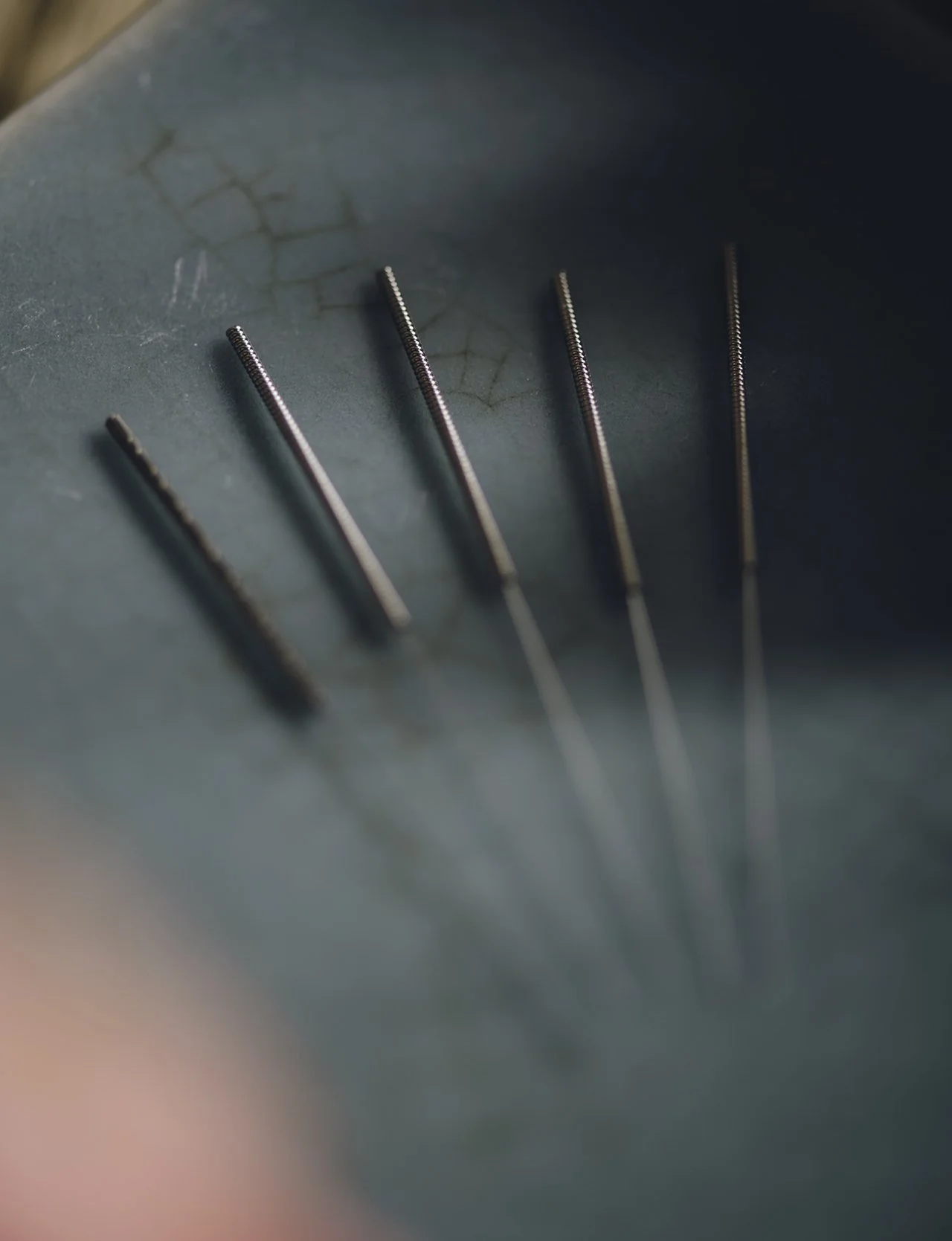
Acupuncture needles are solid, sterile, single-use, and remarkably thin - often about the thickness of a strand of hair. Unlike the hollow needles used for injections or blood draws, they don't inject or remove anything. Their fine size allows for gentle insertion, and many people are surprised by how little they feel when the needle is placed.
Once a needle is placed, you may notice a subtle sensation around the point, such as mild warmth, a little pressure, or a gentle tingling. Some traditional practitioners refer to a sensation called de qi, often described as the arrival of qi. However, a strong sensation is not necessary for acupuncture to be effective. From a physiological perspective, even gentle needle stimulation can activate sensory nerve fibers in the skin and underlying tissues, sending signals to the spinal cord and brain. Researchers have also observed connective tissue gently interacting with acupuncture needles as they are rotated, which may help explain how stimulation at a small, localized point can influence surrounding tissue.
Unlike injections, acupuncture isn't intended to produce a sharp or painful sensation. Dr. Cindi uses a gentle approach, with needle depth and stimulation tailored to each patient's comfort and needs. What you feel should be subtle and comfortable - if a needle feels uncomfortable or something doesn't feel right, patients are always encouraged to speak up so it can be adjusted or removed.
Why So Many People Fall Asleep on the Table
After the needles are placed, patients typically rest for about 30 minutes. For many, this becomes one of the most memorable parts of the treatment. The combination of gentle needling and quiet rest can create a sense of deep relaxation, and it's not unusual for patients to drift off to sleep.
Part of the reason involves the nervous system. Everyday stress can keep the body in a heightened state of sympathetic, or "fight or flight," activity. Acupuncture may help shift the balance toward the parasympathetic nervous system, which is associated with rest, digestion, and recovery. Breathing may slow, muscles relax, and the mind becomes quieter. This calming response is one reason acupuncture is often used alongside other care for anxiety and chronic stress.
Brain chemistry may play a role as well. Research on acupuncture for pain has linked treatment to the release of the body's natural pain-relieving chemicals, including endorphins and other opioid peptides. Functional MRI studies have also recorded changes in brain regions involved in pain processing and mood regulation. These effects may help explain why many patients feel calmer and more relaxed after treatment, and why acupuncture is commonly incorporated into care plans for sleep problems and insomnia.
The quiet rest period is an important part of the experience. There's no need to do anything, talk, or even stay awake. Patients can simply relax and allow themselves some time to unwind.
The Hours After a Session
Most people leave acupuncture feeling relaxed. Some feel a little tired, pleasantly sleepy, or even slightly spacey for an hour or two. Others notice a sense of lightness or renewed energy. Both responses are normal, and everyone responds a little differently. Occasionally, a small bruise may develop at a needle site, but this typically fades within a few days.
After treatment, it's a good idea to give yourself a little time to ease back into your day. Stay hydrated, eat a regular meal, and consider keeping strenuous exercise or other demanding activities to a minimum for the rest of the day if you're feeling tired or relaxed. There's no need for special recovery measures - simply pay attention to how your body feels.
Some patients notice changes right away, while others experience the most noticeable effects later that evening or the following morning. Improved sleep, reduced tension, or a gradual change in their original symptoms may be among the first things they notice. Acupuncture doesn't stop when the needles come out - the body's response continues over the hours and days that follow.
When Will You Notice a Difference?
Some people notice changes after their first acupuncture session, whether it's less pain, better sleep, or simply feeling more relaxed. For others, improvements are more gradual and become noticeable over several treatments. The response depends on the condition being addressed, how long symptoms have been present, and individual factors. Even when changes aren't immediate, that doesn't mean treatment isn't working.
Why One Session Is Rarely the Whole Story
A single acupuncture session can make a difference in how you feel that day, but lasting improvements often develop over a series of treatments. With each session, acupuncture provides another opportunity to influence the body's responses, address ongoing symptoms, and build on changes from previous treatments. Over time, these effects may become more consistent and longer lasting.
How often you come in, and for how long, depends on your individual needs and what you're hoping to address. A recent back strain, for example, is very different from a long-standing hormonal concern. Fertility care often follows a different timeline as well, with treatment planned around the menstrual cycle. Many patients approach it in terms of cycles rather than individual visits as part of an individualized fertility acupuncture plan.
Acupuncture can also be combined with other supportive therapies when appropriate. Depending on your needs, Dr. Cindi may recommend Chinese herbal formulas, lifestyle adjustments, cupping, or heat therapy as part of your overall care. These approaches are selected individually rather than routinely included in every treatment. Acupuncture is designed to complement your existing medical care, not replace it. For more on the conditions patients commonly seek treatment for, see acupuncture's healing benefits.
Frequently Asked Questions About Acupuncture
How many needles are used during an acupuncture session? | The number varies depending on your symptoms, treatment goals, and individual needs. Some treatments use just a handful of needles, while others may use more. The goal isn't to use as many needles as possible, but to select the points that are most appropriate for you.
How often should you get acupuncture? | Treatment frequency depends on what you're addressing and how long you've been experiencing symptoms. Some people benefit from weekly sessions, while others may need more frequent treatments initially. Your acupuncturist can recommend a schedule based on your individual needs and response to treatment.
Does acupuncture hurt? | Most people find acupuncture much more comfortable than they expect. The needles are extremely thin, and with Dr. Cindi's gentle approach, insertion is typically mild. You may notice a little warmth, pressure, or tingling, but treatment should not be painful.
Can I get acupuncture if I'm taking medication or seeing another healthcare provider? | Yes. Acupuncture can often be used alongside conventional medical care and prescribed medications. Be sure to let your acupuncturist know about your medications, medical history, and any other treatments you're receiving so your care can be appropriately tailored.
See How Acupuncture Works for You in Campbell
The best way to understand how acupuncture may benefit you is to have a conversation with a practitioner who takes the time to understand your health concerns and individual needs. Dr. Cindi Ignatovsky, DACM, L.Ac., brings more than 20 years of experience to her Campbell practice, welcoming patients from San Jose and throughout the South Bay.
Click here or text 408-761-6251 to schedule a free 15-minute phone consultation and find out whether acupuncture may be right for you. •
